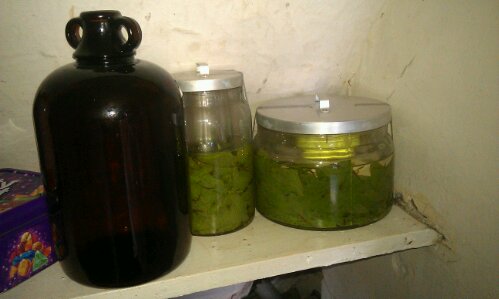
Two carrier bags of young beech leaves steeping in three liters of gin.
Two carrier bags of young beech leaves steeping in three liters of gin.
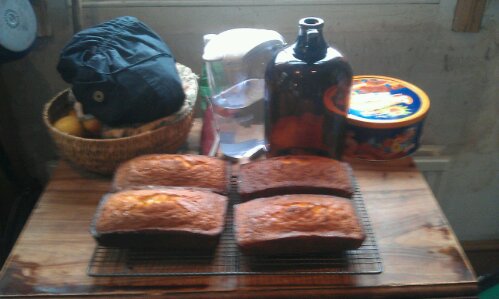
Four lemon drizzle cakes for the allotment annual plant sale, well two for home and two for the sale.
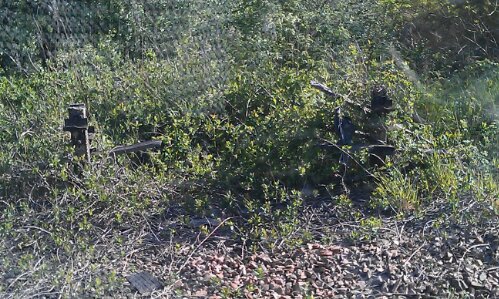
Along the edge of the rail line run these posts that look like they once carried wires. I’m sure I can recall them with multiple strands. Were they telegraph wires?
I saw the first swift of the year above Bole Hill Park.
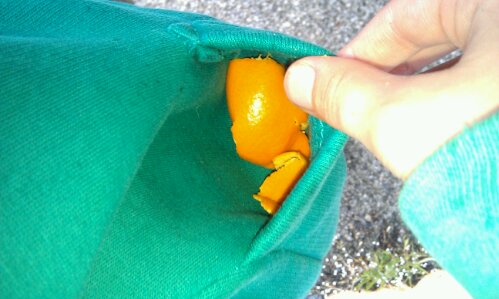
There I am writing about collaborating with the litterer. On the way back from school my daughter eats a tangerine. You’ve not dropped the peel? I ask. No I hear, it is in her pocket.
Below is part of a reply I made to a friend who is concerned with collaboration in socially engaged arts practice.
The idea of “(a)rt becoming at least in the west more democratic” (perhaps) is an expression of it not being even possibly democratic.
Continue reading “occupation as art”
Some time ago in a sitting room in France with some British friends I was looking at the photos, prints and paintings hanging on the walls. I had began a conversation with them about the idea that the natural world, the landscape, nature shared important attributes with God, perhaps the Old Testament God who had unlimited power that knows no bounds and cannot be controlled. The natural world, nature is also bounteous, offering food, shelter. Nature is destructive but without blame in spite of this, it is essentially unknowable.
We were discussing the images on their walls, landscape images of walking destinations in the Lake District, views of fields in southern France, seascapes with Yachts. These were like icons I felt and in fact were in a very literal way icons, they stood for the natural world but were not in themselves nature. Looking at them, admiring them was not the same as being in nature, walking in it, breathing it, mourning it.
There are some images of the natural world, Sunflowers by Van Gogh, that are seen as expressing such proximity to nature that they are valued highly, they evoke great passion and offer a sense of idolatry where they are more than representations but have some power to themselves.
This is part of a set of ideas that relate ecology and fascism. The central concept is that that the position of nature above people ethically (and most terribly scientifically) required to submit to nature’s needs (of which they are part) is the ideological form that could support a final solution where the victim is the unregulated resource consumer.
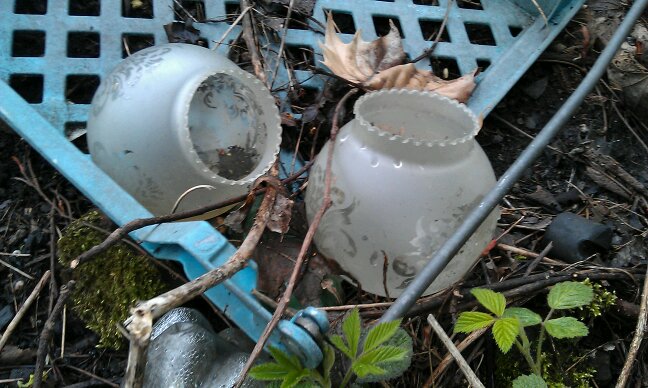
I was out walking on Tuesday, well, I stopped the car and clambered into a small wasteland, once the site of pigeon lofts. Continue reading “the litterer and i”
Writing about collaboration again in the context of socially constructive arts practice, that is work done by artists which is supposed to have some sort of beneficial impact on a specific social environment.
I’m very suspicious of all collaboration! aren’t you? When we fall in love we do things together and then we don’t and we do but we don’t collaborate. When we get on and are excited we share ideas and emotions but this is not collaboration. When two people academics or not come together and write every word, this is not collaboration – it is just doing that for some other reason and calling it for some reason collaboration.
Collaboration comes from difference and that alone, the only interesting use of the word is the collaborator of WW2 who negotiated violent difference by taking sides. Nothing good in it. It is not nicely coloured but a statement of separation.
So. If you are comfortably writing every word together then you are not collaborating, just having complicated tea.
If you are uncomfortable with each other, you disagree, maybe not even get on, then you are on the right royal road of the true collaborator.
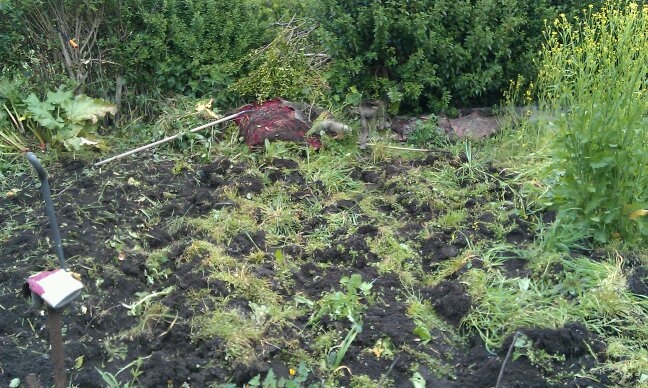
We’ve started digging the plot. DD has taken the lead, a farmer from Ghana, he is showing me how to work the garden using my digging hoe. This was bought in Spain from a Chinese shop. It is a very different way to work the ground from the ways I have learned.
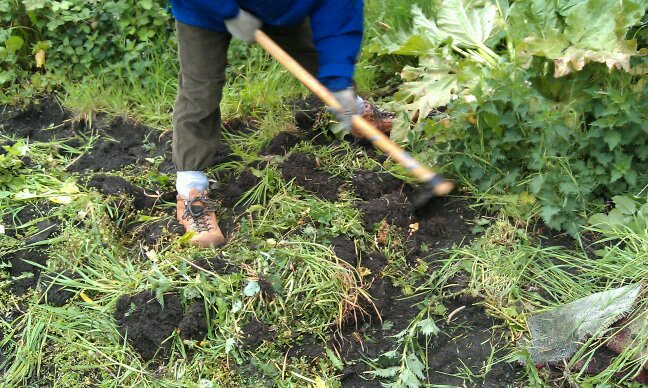
DD works across the soil in a system where the mound he is intending to create is the width of one person’s reach with the hoe.